
This post is written by Hanna Metuda, Deputy Director, NVAHA.
The act of chopping wood is rhythmic, steady, and deliberate. One swing won’t split a fallen tree, but rather a repeated, compounded motion that creates kindling for the next fire, or so said in his “pastor voice” by Rev. Joseph Williams during the Leckey Forum.
Housing policy feels a lot like that, especially when navigating through uncertainty. It’s rarely, if ever, one breakthrough reform that results in solving the affordable housing supply problem. Progress comes from the repetitive, often unseen work that keeps the momentum going. Each zoning change, funding innovation, and public-private partnership is another swing of the axe.
At this year’s Leckey Forum, the speakers reminded us that despite any challenges we face, real progress is happening and depends on persistence: keep chopping wood, and eventually, sparks become systems change.

What We Heard — National Solutions in Housing Policy
Dr. Tina Stacy of Urban Institute and Mike Spotts of Habitat DC-NOVA opened the forum with a conversation on what’s working in housing policy across the nation and why. Their conversation underscored: the tools exist, but scale and execution matter.
- Upzoning at scale works. Minneapolis and Auckland, New Zealand show that broad zoning reforms, not just small pilot areas, expand supply and moderate rent prices.
- Accessory Dwelling Units (ADUs) help when rules are realistic. California’s success came from allowing multiple ADUs per lot, easing parking requirements, and removing owner-occupancy restrictions that stall development.
- State housing target programs create accountability. Several states, such as Massachusetts, New Jersey, and Oregon, set production targets to ensure every locality contributes to statewide housing goals.
- Better data means better housing policy. Localities often rely on outdated or incomplete data. Urban Institute is currently developing real-time neighborhood-level rent data that can transform how policymakers target resources, evaluate impact, and respond to emerging affordability pressures in time to make a difference. More to come!
- Targeted homeownership programs close wealth gaps. Homeownership remains out of reach for many, but a few states have designed programs, such as Minnesota’s FirstGen and MassDREAMS, to close intergenerational wealth gaps by supporting first-generation homebuyers. Fannie Mae factors in first-generation as a criterion to promote equitable access to credit.
- Supportive housing is an investment. A Denver study found participants spent 38 fewer days in jail, 6 fewer emergency department visits, and made 4 fewer detox visits after obtaining housing, proving that every dollar spent on stability yields measurable public savings in health care and criminal justice systems.
“If you had 50 people going into allergic shock and only 10 EpiPens, you wouldn’t say the EpiPens didn’t work — you’d say you didn’t have enough EpiPens. We need more EpiPens.
Dr. Tina Stacy, Urban Institute
We need more housing.”
What We Heard — Regional Housing Innovations
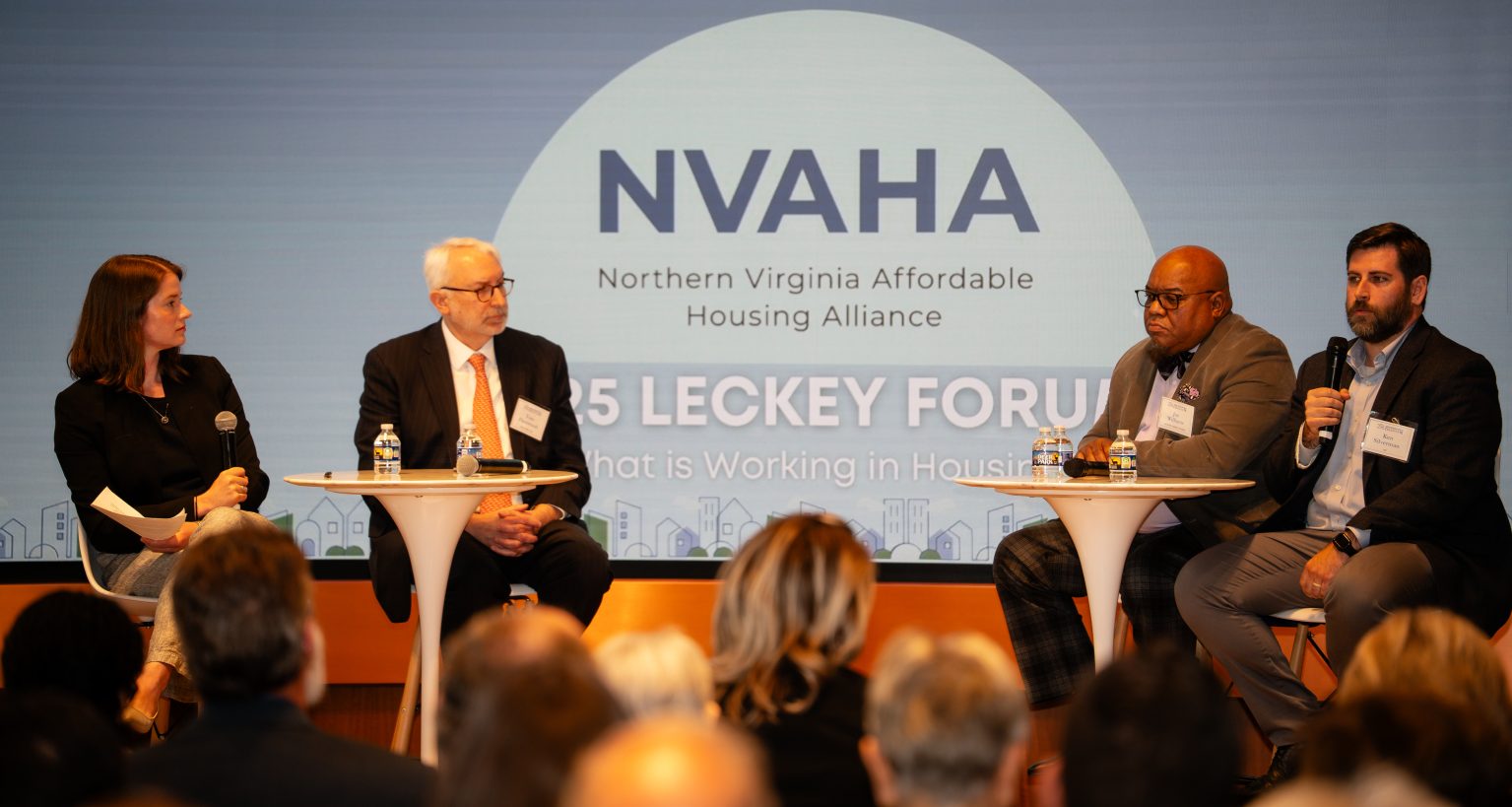
The second panel, moderated by Margaret Barthel of WAMU, highlighted how public agencies, faith institutions, and local governments are closing gaps in production, financing, and trust through collaboration, creativity, and partnerships.
- Public land for public good. Tom Fleetwood, Fairfax County’s Housing Director, described how the county is using its own land to model the values it promotes. At the Fairfax County Government Center, a former parking lot will soon hold 275 affordable units and a childcare center, developed with Lincoln Avenue Communities and Cornerstones. Fleetwood called it “affordable housing in our own front yard.”
- Revolving public funds deliver affordable units. Ken Silverman of Montgomery County’s Housing Opportunities Commission (HOC) shared how the $100M Housing Production Fund launched in 2021 allows the county to finance new construction without relying on new federal subsidies.
- Faith partnerships turn mission into development. Rev. Joseph Williams, Senior Program Director at Enterprise Community Partners, reminded us that some of the most overlooked housing opportunities are sitting in plain sight, on land owned by houses of worship. Through Enterprise’s Faith-Based Development Initiative (FBDI), his team trains faith leaders to become informed housing partners, provides pre-development grants, and connects congregations with experienced development coaches.
“If your first step in being a community partner is development, you’re doing it wrong. You have to already be a community partner.”
Joseph Williams, Enterprise Community Partners
Progress isn’t magic. It’s motion.
Keep innovating. Keep advocating. And keep chopping wood.